Shipping a Car Across the Atlantic
@dalexeenko|January 7, 2026 (4m ago)122 views
I spent two years looking for this car.
Back in 2023, the 718 Cayman GT4 was not a car you could simply walk into a dealership and buy. There were no allocations, insanely high markups and every dealer wanted you to buy a Macan first. So I did what any reasonable person would do — I built a spreadsheet with 192 rows in it. Do things that don't scale.
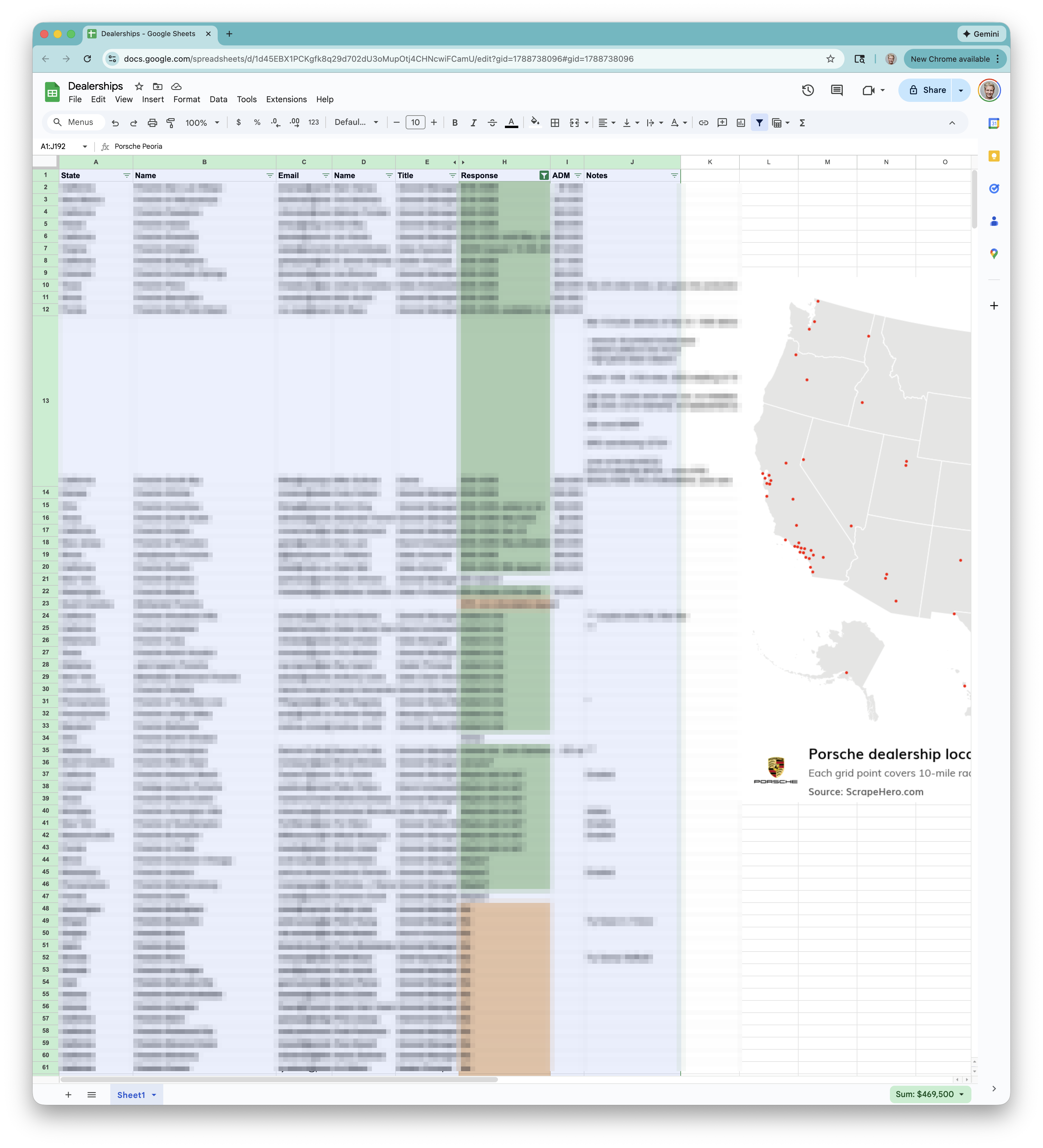 Do things that don't scale
The spreadsheet had every Porsche dealership in the United States. I reached out to everyone under the sun. Some dealerships asked for $30k over MSRP. Some wanted $50k. Others just said no.
One Sunday evening in May, my wife told me to check the website one more time. And there it was — an allocation for a GT4, configured exactly how I wanted it. I already had the General Manager's phone number saved in my contacts. I immediately called and put down the deposit.
Stuttgart to Seattle, via Panama
Once the order was confirmed, the wait became the fun part. Porsche builds these cars at the Zuffenhausen factory in Stuttgart. From there, it was transported to the port of Emden and loaded onto a cargo ship bound for Los Angeles — the Cepheus Leader, a Japanese vehicle carrier operated by NYK Line.
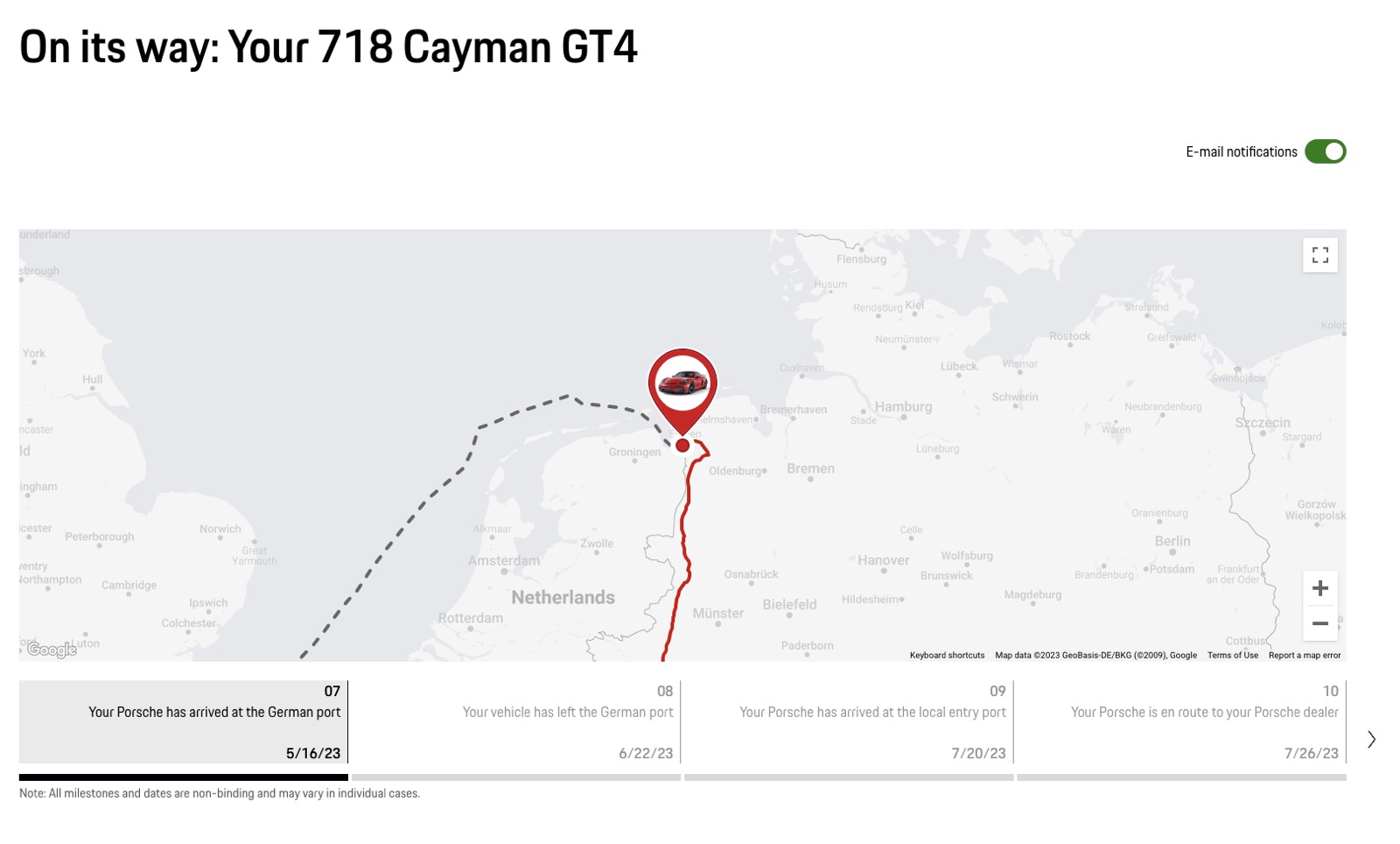 Stuttgart to Seattle
I tracked it from Emden through the North Sea, down the Atlantic, into the Caribbean and into the Panama Canal. Fun fact: I remembered the names of the Panama Canal locks from my time at Airbnb. While designing the architecture for how money flowed through our payments platform, we'd named the stages after canal locks: metaphors for where funds were held, verified and released.
The Panama Canal Authority has live cameras on the locks — and I could actually watch the Cepheus Leader pass through in real time. Here it is at the Gatun Locks:
 The Gatun Locks — Panama Canal webcam
And at the Miraflores Locks, passing through, carrying my car somewhere in its hold:
 The Miraflores Locks — Panama Canal webcam
The car then arrived in Los Angeles, was transported up to Seattle, and after two years of searching and two months of shipping, it was finally in my garage.
The Move to Lisbon
If only I knew that a year and a half later, we'd be moving to Lisbon. Suddenly I had a choice: leave the car sitting in a garage in Seattle dreaming of the racetracks of Portugal, or take it with me.
I was told not to ship it. The car would need to be homologated for European standards, which meant making physical modifications to it. Service and warranty wouldn't work. The import tax would be enormous.
Turns out none of that was true. What nobody warned me about was the bureaucracy. I spent four months trying to register my car in Portugal.
The Twenty Five Step Process
The car arrived in Lisbon in March. Back on the European continent. I started getting ready to drive it around in April. Boy, was I naive.
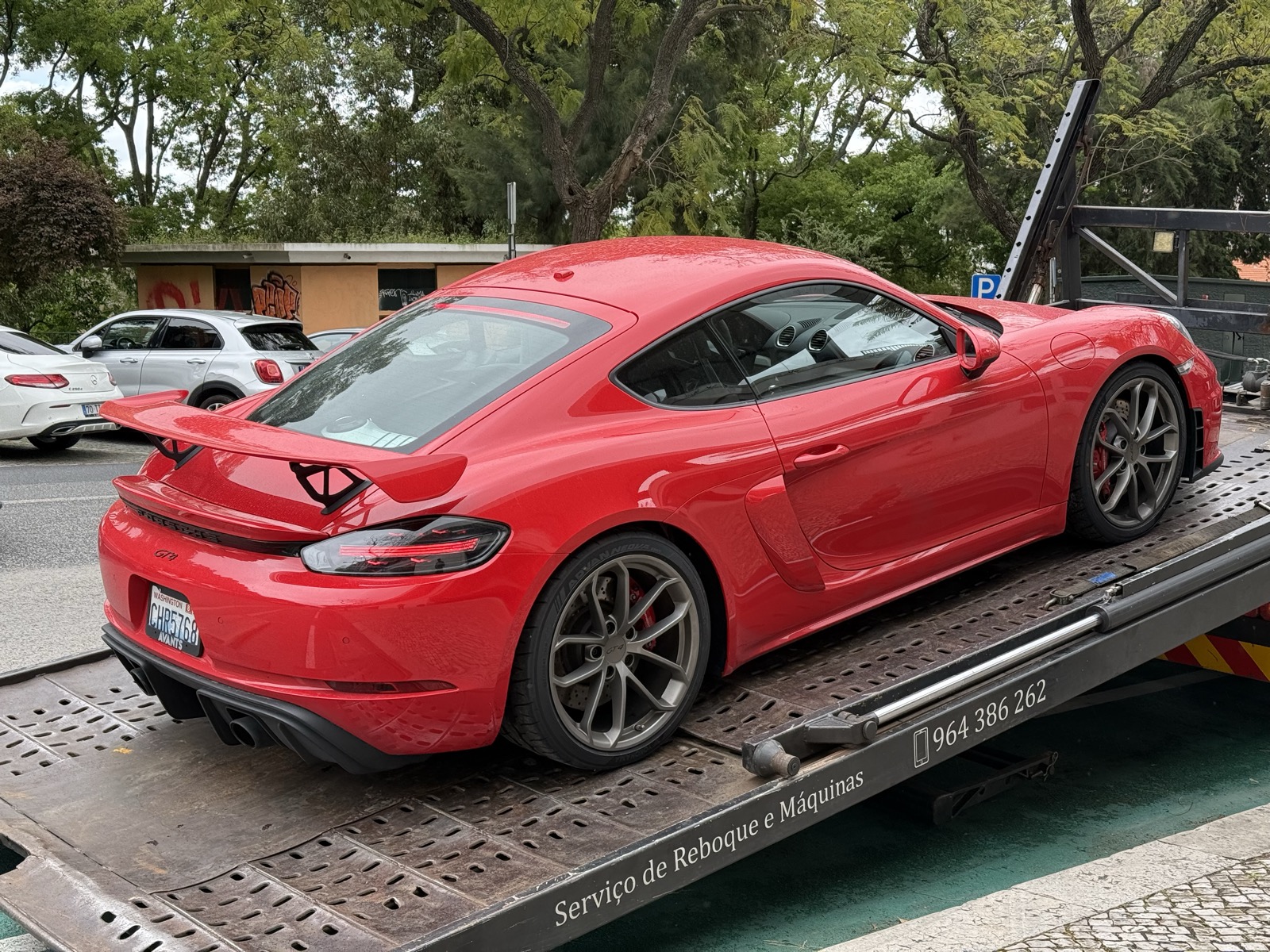 Arriving in Lisbon
When I researched the process and read this guide provided by the British Government, I assumed that simply following the 5 steps outlined in the guide would be enough. I had the car for more than 12 months prior to moving it to the EU. I was moving from outside of the EU. These two factors promised a fast track.
I spent a month engaging in the traditional cornerstones of Portuguese bureaucracy: sending documents, taking pictures of my tires, filling out power of attorney forms, applying for apostilles, certified translations and notarized copies. Then I waited. Nothing happened. So I found this firm run by a Dutchman named Mathijs. Finally, I had a clear view of the whole process. The ETA part of this view was still blurry, but it was a good start.
Before anything else, the car needed an individual homologation, in other words, proof that it meets European standards. For cars sold in Europe you get a CoC (Certificate of Conformity) which simplifies the process. In my case, I had to get some extra paperwork which took time. IMT (Instituto da Mobilidade e dos Transportes), the Portuguese DMV, took even longer to process it. My firm joked about offering IMT a bottle of wine to speed things up. I asked if I should get a Douro or Alentejo red.
In July, nearly four months after the car arrived, we finally got the green light to book an inspection called IPO Inspection B. The next day I brought the car to the inspection center in Amadora. There was a moment of panic at the counter. The inspector wanted a CoC, which we didn't have since it's a car that was made for the American market. I called my guy. He called another guy. The other guy ended up talking to the inspector for what felt like several hours. The inspector furrowed his brows and sighed. "Americanos!" I did my best impression of American diplomacy. The actual inspection took less than 10 minutes. I passed on the first try. As a reward, I got my Modelo 9 form and a yellow inspection form.
With the inspection done, the customs application went in immediately. This is where you prove to the Portuguese government that you're a real person who really lived in the US and really owned this car for more than six months. Customs kept asking for more documents. First, utility bills and a social security statement. Then registration. Then they got confused by my American title. Every request meant another several days of waiting. Mathijs kept pushing.
In August, my DAV (Declaração Aduaneira de Vehículo, which is basically a temporary registration) document was approved – for once, way ahead of schedule. My license plate number was assigned, and I could finally get Portuguese plates made and apply for insurance. Bingo!
The next step was getting a DU (Documento Único), which is basically a car registration document. The registration can take 10-12 weeks. I paid a priority fee which accelerated the process to 3-4 weeks. Finally, in November I got my DU!
Two years of searching, eight months of shipping and paperwork. When I took it to Estoril and Portimāo, though, it made it all worth it.
 Estoril
Thanks to Horace Ko for reading drafts of this.